
Have you faced a problem when two different people do the same thing, who understand the final result differently and is aggravated by the fact that both of them are not well-versed in the issue and rely only on their own vision of the final goal?
Why such an ornate introduction? Moreover, such a problem occurs quite often, and often where you do not expect. Take, for example, smartphone manufacturers who equip their devices with functionality that is simply inconvenient to use. Example? Please – NFC (I love this function, what to do), when the coil is placed in the center of the back cover of the device.
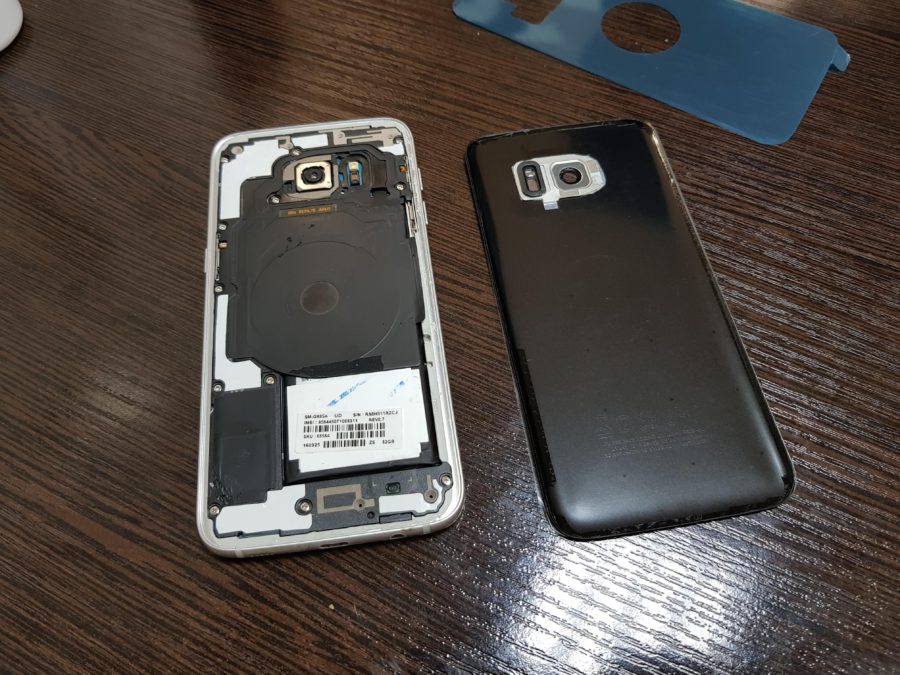
Is there a function? There is. Is it convenient to use it? No, because such an important parameter as ergonomics is not taken into account. Indeed, most often we hold the smartphone so that it is convenient to use the screen, and not vice versa. So why, for such a simple action as payment, it is necessary to intercept the smartphone not only in an inconvenient but also a dangerous way (in which it can fall out of hand)?
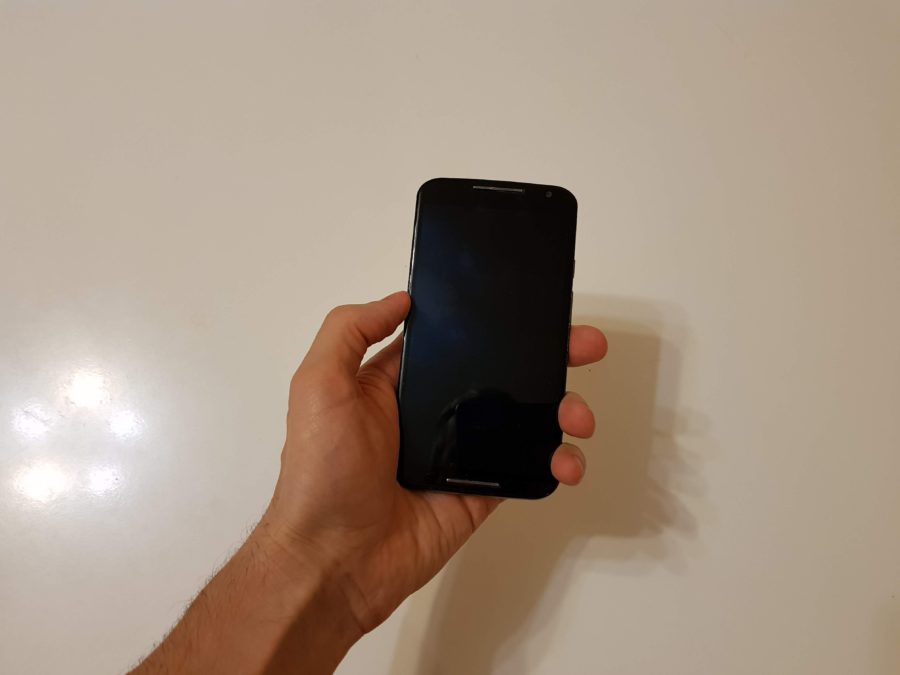
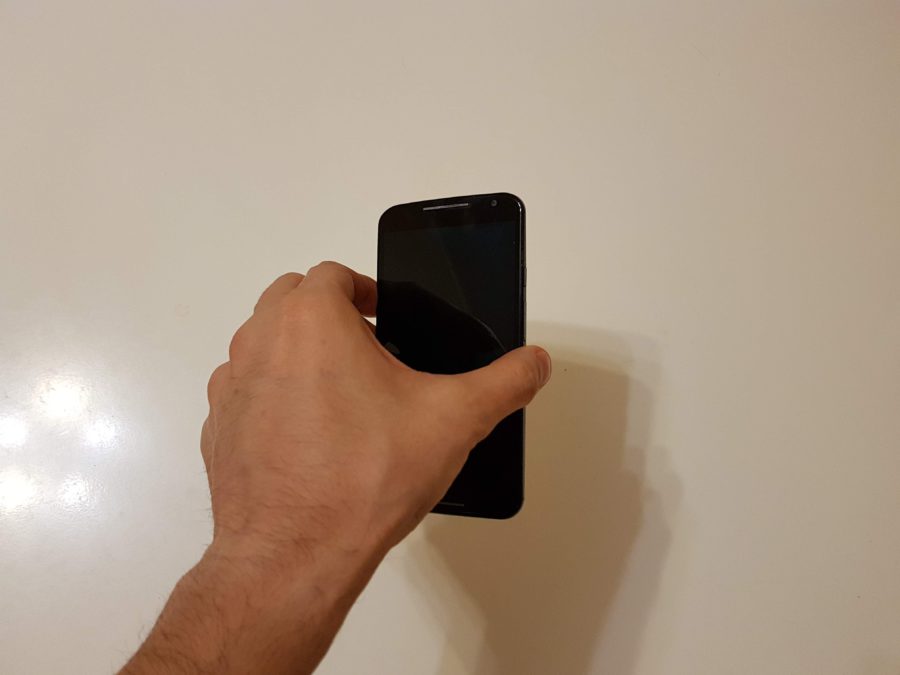
There are exceptions, for example, Apple, where under Steve Jobs, the focus was not on functionality as such, but on convenience in little things, and where these very little things did not exist, since it is the little things that determine the final customer experience.
It is thanks to this legacy of Jobs, after the appearance of the contactless payment function in iPhone, the antenna was placed not in the middle of the back cover, but in the upper part of the smartphone, making it convenient to use this functionality.
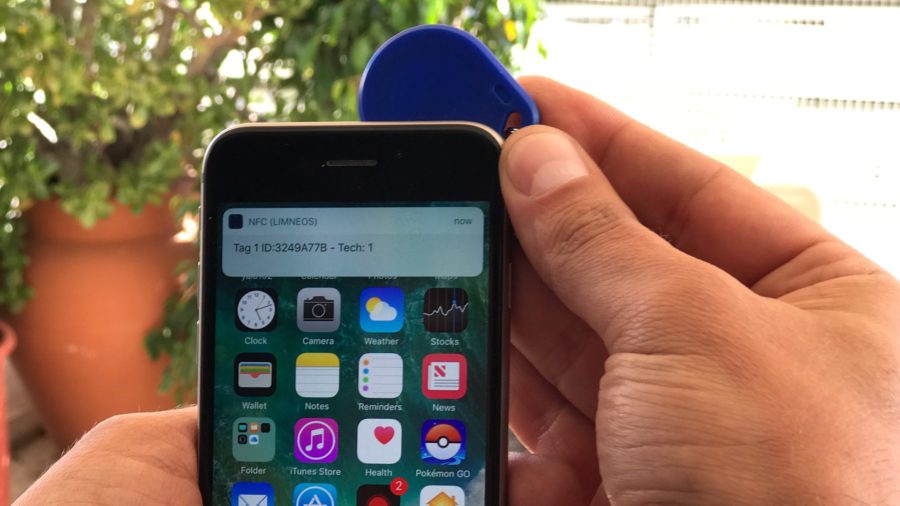
iPhone does not have to be intercepted for payment. Everything happens with the natural grip we are used to.
But the system always works well only if all its parts are sharpened for each other.
You don't need to look far for an example – let's take the 'restaurants' of popular fast food chains Burger King and McDonald's. At some point in time, self-service terminals operating with bank cards appeared in them, which significantly accelerated the service process and made it possible to reduce the number of personnel, since with such a service system, a retail outlet no longer needs so many cashiers. Let's leave the social aspect in the form of unemployment outside the brackets, since now we are not talking about that, and focus on the main topic – convenience and mutual understanding of all aspects of the process.
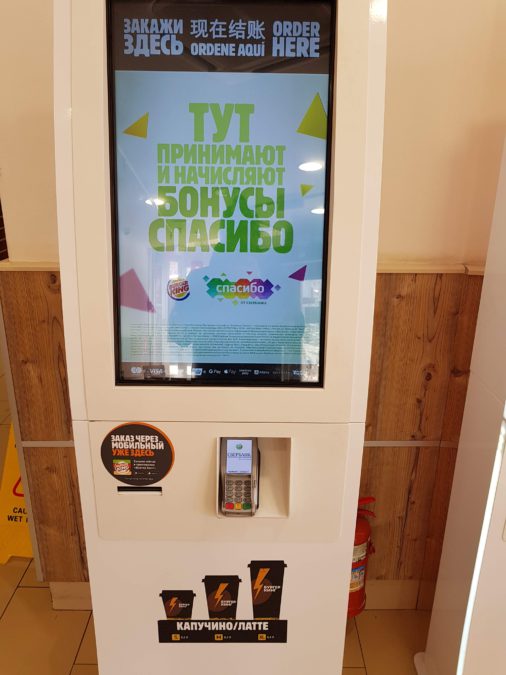
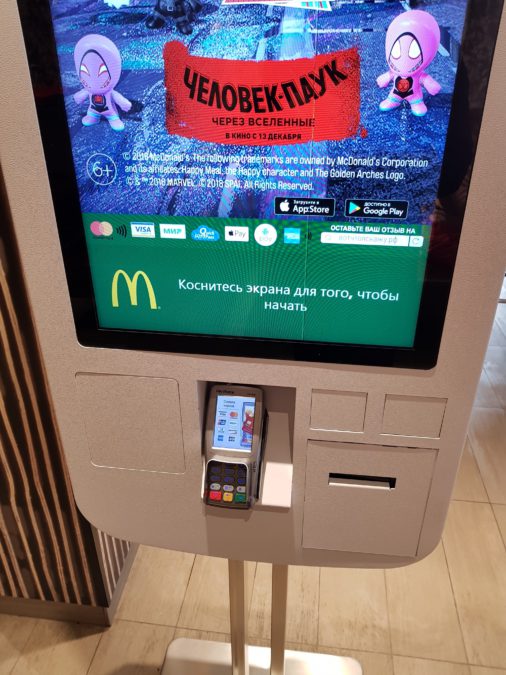
So, apparently, the order for the manufacture of these self-service islands was placed with contractors who were given a technical task, which, perhaps, was prepared by intelligent specialists in the field of creating utilitarian engineering structures, but who did not understand anything about customer service. This is often the fault of techies, who primarily rely on standards and specifications, and not on the convenience of the end user, because it is first of all important for them that it works. And it works.
The main problem of these self-service islands is a special niche for a banking terminal, which looks solid and reliable, and even convenient, but only until you try to use it.
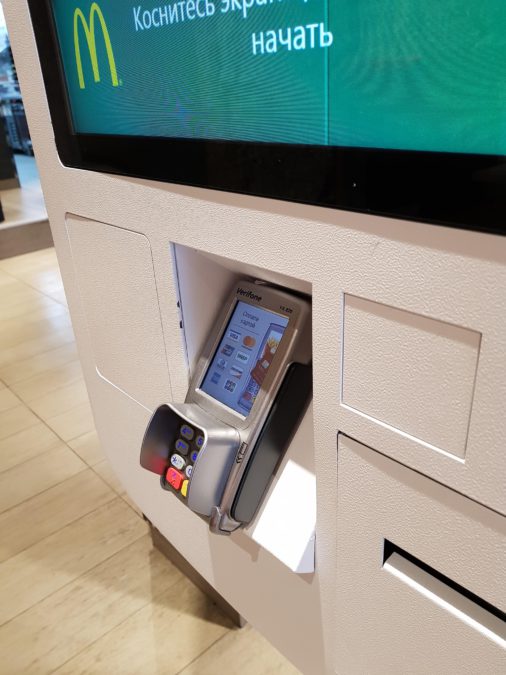
And here it turns out that it is convenient to pay for the order there only using a bank card, and not a smartphone – it simply does not fit in there, since the walls of this niche interfere from the sides and from above, and the terminal's protective bracket from below which cannot match the area of the NFC coil on the smartphone with the receiver on the terminal.
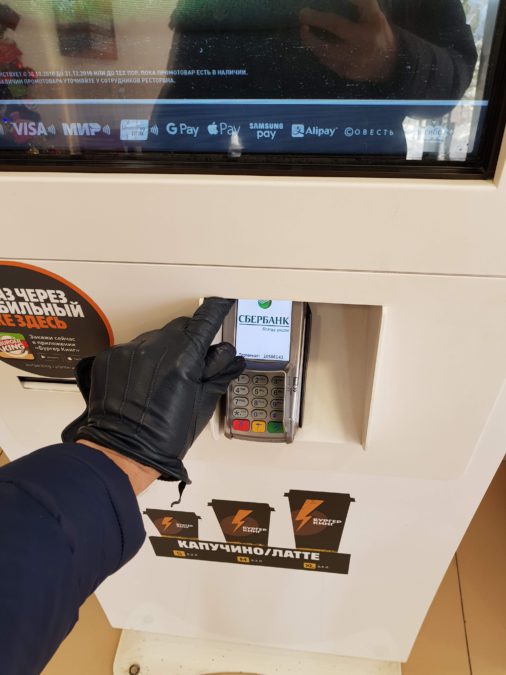
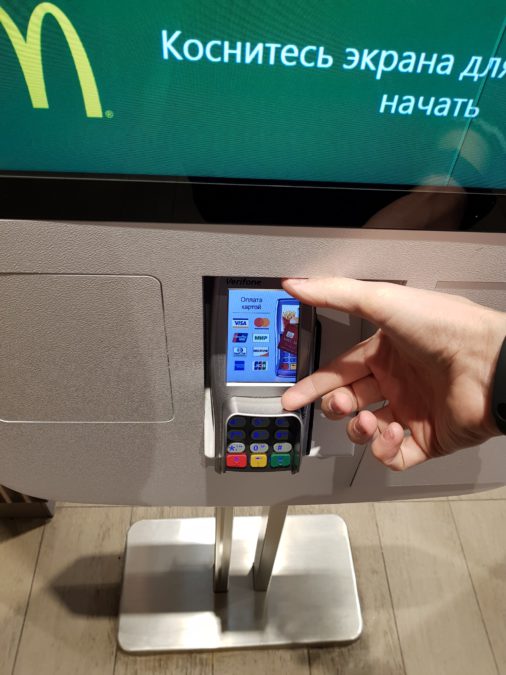
So it turns out that there is a function, but it is inconvenient to use it.
The most interesting thing is that, apparently, typical solutions were used in both networks, since both there and there they almost completely repeat each other, which means they have the same disadvantages. However, at Burger King it is a little easier as the niche is not that deep. But it's still inconvenient.
But in this case, it turns out to be convenient to pay with a fitness bracelet, which is much easier to bring to the reader, which is banal due to the physiological characteristics of a person's hand.
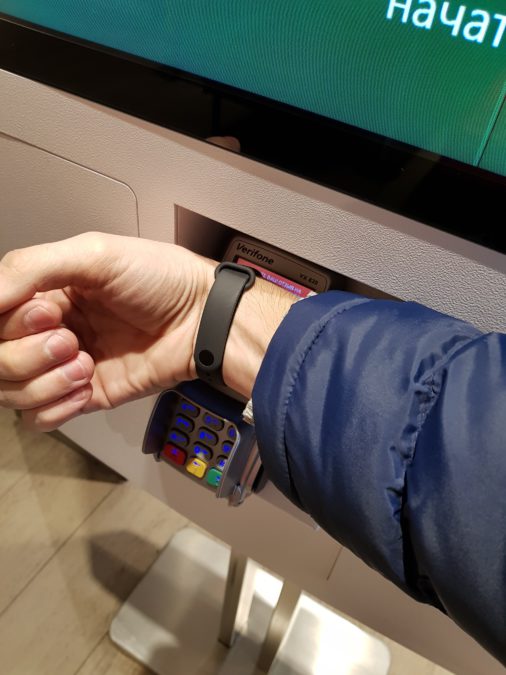
Someone may argue that then you need to pay not by phone, but by card, and to this I will answer – yes, of course, you can generally go to the cashier and pay fine there with cash, bank card, phone, and whatever. But this is not the question, but the fact that in such cases, the one who created the terms of reference for the contractor had to take into account all possible nuances that could affect the customer service.
There is a feeling that, as is often the case, a given project in these networks was in charge of someone who was simply assigned in charge and who was assigned to complete the task.
He did it to the best of his knowledge and skills.
And, perhaps, he even received a bonus and a salary bonus for this. And there is nothing wrong with that. But even despite my rather rare visits to these networks, inside there is a negative aftertaste from the realization that now I have to either twist my hand with the phone and look for the right angle so that the terminal sees the phone, or climb into the bag in advance, take out the wallet in which it lies map. And if you don't have a wallet with you? Then turn your hand or go to the checkout and stand in line. Only the bracelet saves me. But how many have it?
It would seem that the solution to the issue is elementary – any bank terminals can be equipped with remote controls, the cost of which is hardly great. And, given the rapidity of technology development, this could have been thought about in advance by including this clause in the acquiring agreement.
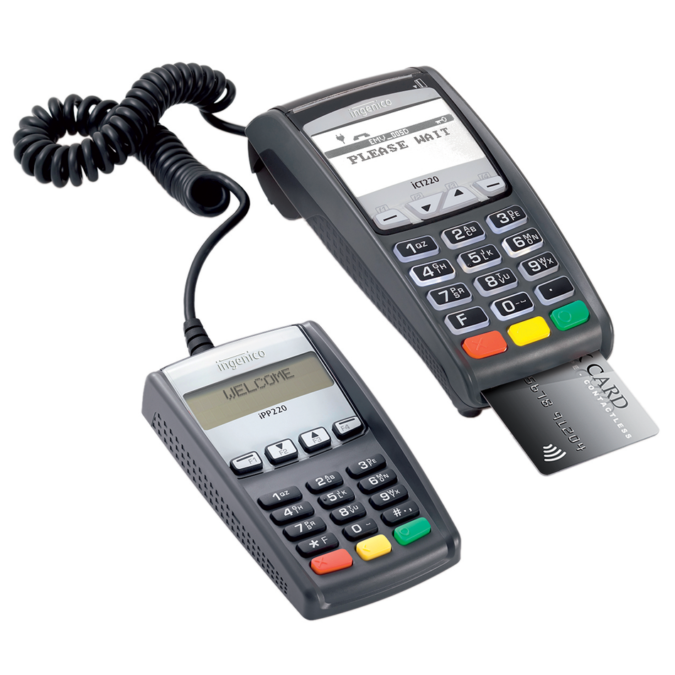
These remotes, in turn, can be placed in islands near the main terminal, for example, by making a hole in the island body and screwing the remote control from the inside. Yes, this is a waste for the company on the services of contractors who would do it all. But this is now a waste, but what if the person responsible for this decision thought about this little thing at the design stage? That's just it.
In this regard, the solution used in chain supermarkets is much more convenient and logical. But, that's a completely different story. On the other hand, they too could have made terminals in niches rather than on a swivel bracket. But they didn't.
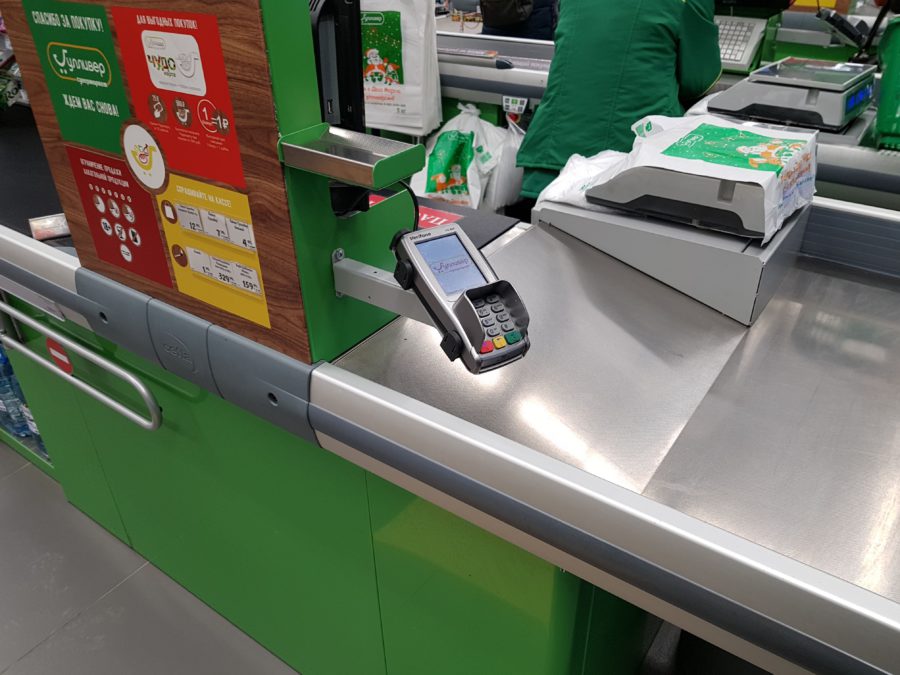
As for the islets of self-service in fast food restaurants, it seems to me that the current state of affairs remains because, firstly, there are not so many people who pay by phone, and secondly, there are no complaints from users who simply do not want spend time on this, as this is a fast food chain and time there is the most valuable resource. And one comes from the other. As soon as among the clients of such networks the number of users who pay by telephone turns out to be more than those who do not use this technology, reviews will appear.
Conclusion
In fact, there are no complaints about the networks themselves, and in this case both Burger King and McDonald's are given only as a vivid example of how a lack of understanding of simple things and technologies can affect the end consumer of your services, on its convenience. and therefore, on the general impression and those emotions that he experiences when he comes to the institution.
In this regard, the approach of Steve Jobs, who “nightmares” his employees, demanding ideal solutions from them not only in terms of functionality and characteristics, but also in terms of convenience and even design, does not seem like such an overkill. Indeed, for most users, it is much more important not what function is in the device, but how convenient and easy it is to use it. And if it is convenient and easy, then it will be used, and if it is inconvenient and difficult, then most likely not.